



Introduction
When someone leaves treatment early, the pain ripples far beyond the program’s walls. Families feel a mix of heartbreak and helplessness—watching the person they love step back into danger. But beneath that moment of loss lies something deeper: a nervous system overwhelmed by fear, shame, and disconnection. Recovery begins not with compliance, but with safety—and that safety is relational.
The Hidden Cost: When Hope Walks Out the Door
Every client who leaves treatment prematurely represents a double loss. There’s the visible financial cost to the program, but the deeper cost is relational—the disconnection from family, community, and hope. For loved ones, the loss isn’t measured in dollars but in sleepless nights, emotional labor, and the unspoken grief of “what could have been.” Families invest something far more valuable than money—they invest faith, time, and heart. When a loved one walks away from treatment, that human capital feels wasted. But it doesn’t have to be. The real question becomes: what kind of environment could have held them long enough for hope to take root?
Why People Leave: The Neurobiology of Disconnection
Leaving treatment isn’t a failure of will—it’s often a protective reflex. When the brain perceives emotional or physical threat, it mobilizes toward safety, even if that means fleeing care. Shame, judgment, or disconnection in the treatment setting can signal “unsafe” at a biological level, triggering fight, flight, or freeze. Understanding this helps families replace frustration with compassion. It also challenges treatment programs to see premature discharge not as defiance, but as dysregulation—a signal that the nervous system never felt truly safe.
The Hidden ROI: Investing in Human Capital Through Neuroinformed Care
Families pour immense emotional energy, time, and hope into helping a loved one take that first courageous step toward treatment. That investment deserves a return. A Neuroinformed Treatment Center understands that the real ROI isn’t just measured in completion rates or revenue—it’s in human capital. It’s in the lives repaired, the trust restored, and the stability regained when every staff member—from the boardroom to the game room—is trained to recognize dysregulation, respond with attunement, and create moments of de-escalation and stabilization that plant the seed of lasting recovery. These organizations see de-escalation and stabilization not as crisis responses, but as core practices embedded in their culture. They treat every interaction as a potential moment of healing.
What Families Can Look For: Choosing a Neuroinformed Treatment Center
When exploring options, ask questions that go beyond credentials and treatment modalities:
– How are staff trained in emotional regulation and de-escalation?
– Is relational safety part of the organization’s mission and daily culture?
– Do leadership and line staff share a common language around trauma and connection?
– How does the program measure outcomes beyond completion—like trust, engagement, or belonging?
A truly Neuroinformed organization makes safety an organizational imperative—a shared commitment that ensures every person who enters their doors feels seen, safe, and supported.
Reconnecting with Hope
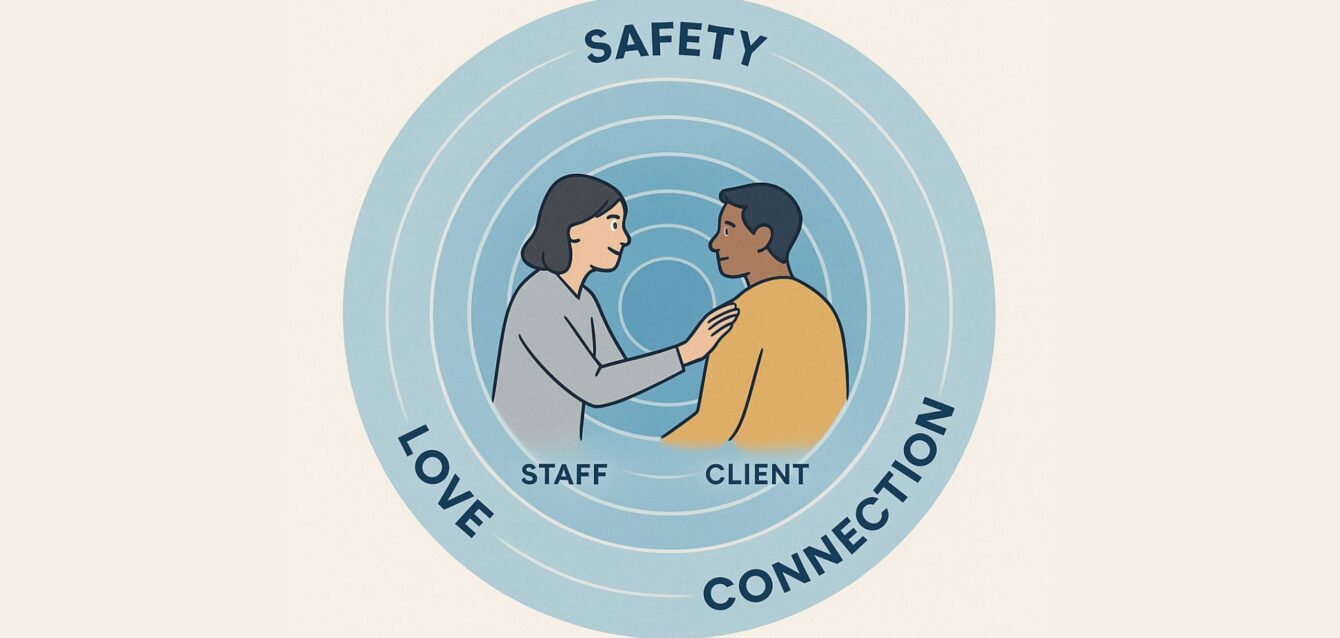
Even when treatment ends too soon, hope doesn’t have to. Families can remain a stabilizing force by offering calm presence instead of control, curiosity instead of criticism. The nervous system learns safety through relationships—and every compassionate response becomes a bridge back to recovery. Healing, after all, is a relational process. When love, safety, and connection become the culture—not just the care plan—hope reconnects, and recovery begins again.
Call to Reflection
“What would it look like if every interaction—from intake to family call—was an act of de-escalation and connection?”